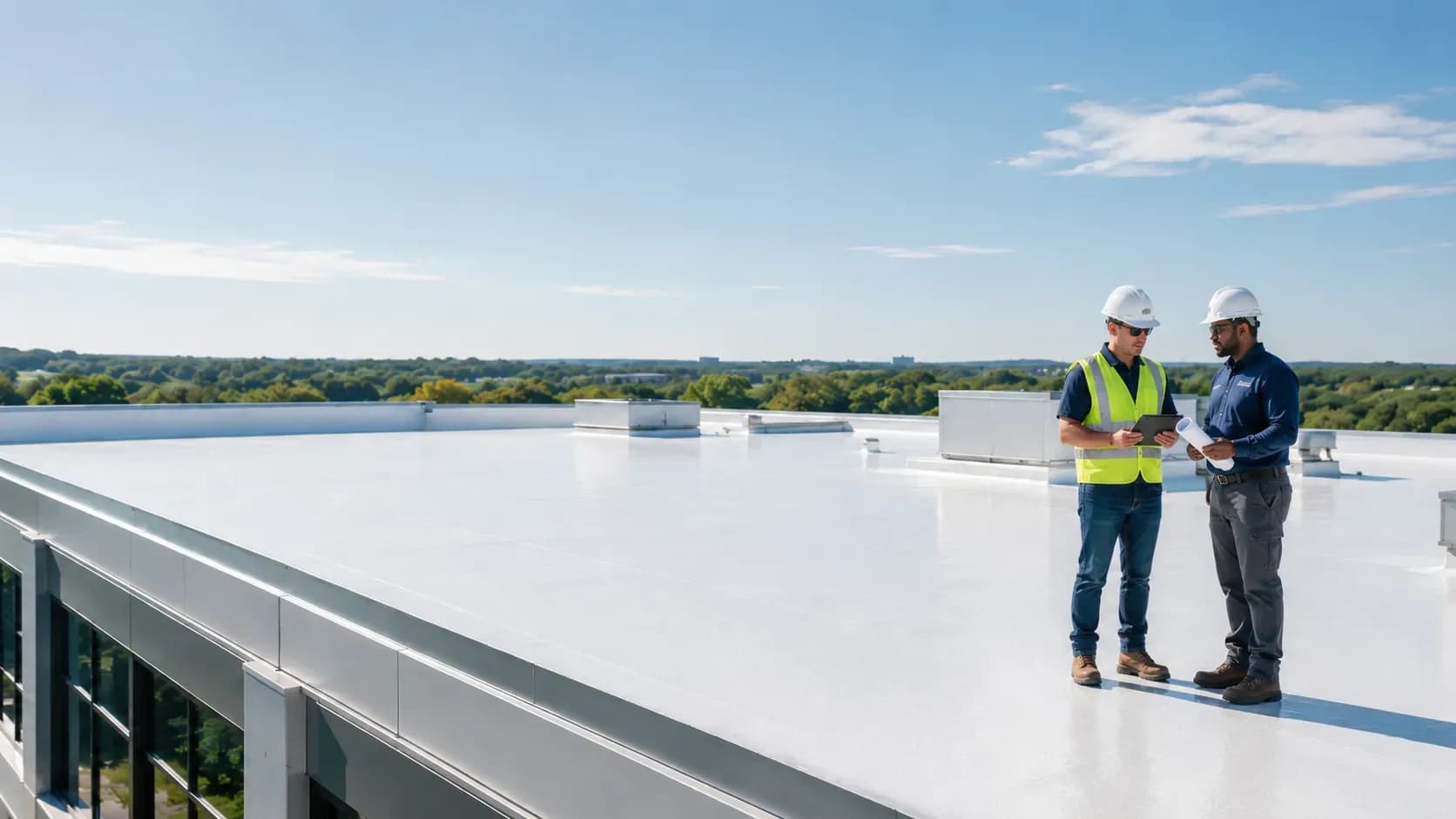
 Engineered Longevity
Your roof doesn't have to be torn off. Ever again.
Every fifteen to twenty years, most building owners write the same check. Tear off. Haul away. Replace. Repeat. There is another path — one that restores the roof you already own, eliminates the seven details where flat roofs fail, and renews instead of replacing for the life of the building.

The seven points of failure
Roofing systems are usually sold on the strength of the membrane. That's not where the trouble starts.
Drains
The number one roofing complaint in any building. A hole cut in the membrane, a clamping ring, four screws — and a building that moves.
Seams
Heat-welded or asphalt-bonded. A weld is only as good as the day it was made and the temperature it was made in.
Expansion joints
The building moves. Semi-rigid systems resist. Something has to give.
Perimeters
Wind uplift concentrates at the edge, exactly where termination is weakest.
Flashings
Transitions between materials and planes, held by mechanical attachment that loosens over time.
Penetrations
Every pipe, curb, conduit, and vent is a hole someone had to seal by hand.
Corners
Compound geometry, hand-detailed, most common site of application error.
Between year eight and year twelve, UV exposure causes these systems to shrink and crack, and it attacks every one of those points. Not because the roofer was careless. Because that's what the sun does. [JF]
The warranty gap
Read what a standard roofing warranty excludes:
- Application error — seams, corners
- Assembly system failure — drains, expansion joints, penetrations, flashings
- Failure to maintain
- Unauthorized owner repairs
Set that list beside the seven points above. They're the same list. The failure points aren't covered. [JF]
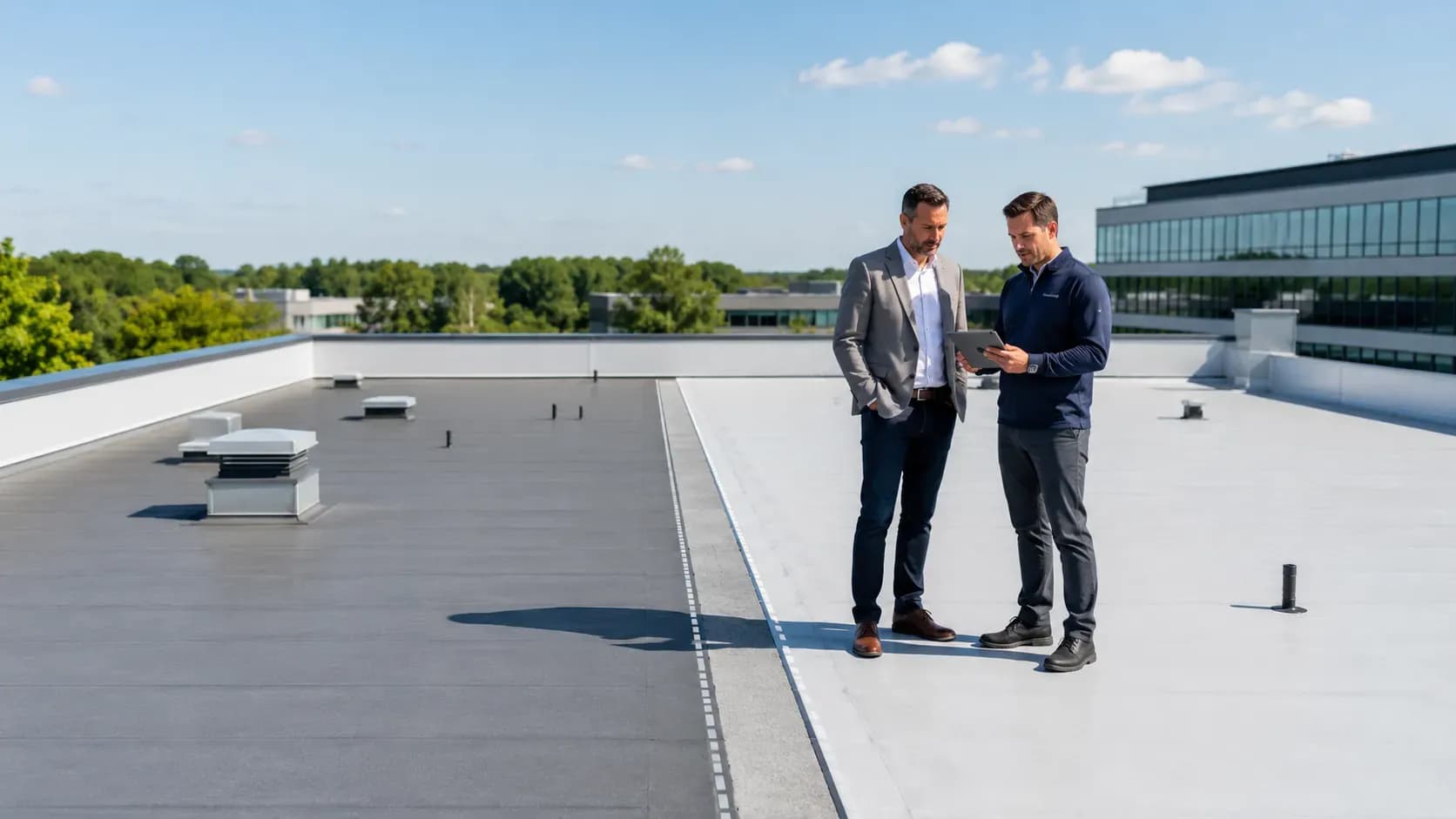
What the market actually offers
We're not against any of these systems. We want owners to know what they're buying.
Modified bitumen: Asphalt-based, applied in rolls. Proven and widely understood. Seams are bonded with asphalt and remain a maintenance point for the life of the roof.
TPO: The white membrane you see on new construction. Consider: formulations vary widely between manufacturers because the material evolved through trial and error. That matters years later — a patch or a new penetration may not weld securely to the original membrane, even from the same manufacturer. Multiple independent studies have also found TPO underperforms in climates with sustained high temperatures. In Texas, that's most of the year.
PVC: Strong, long-lasting, and genuinely resistant to chemical exposure — grease vents, animal fat, and similar. Consider: it typically requires complete removal of the existing roof, which is where the labor cost lives. After about ten years, repairs become more frequent, and older PVC is harder to repair because hot-air welds don't take as well on aged material. Foot traffic should be avoided below 50°F.
Fluid-applied, fabric-reinforced restoration: Quiet installation. No tear-off. Cost effective. Easy to repair. Renewable. Works year-round without disrupting occupancy.
 Engineered Longevity
How restoration works
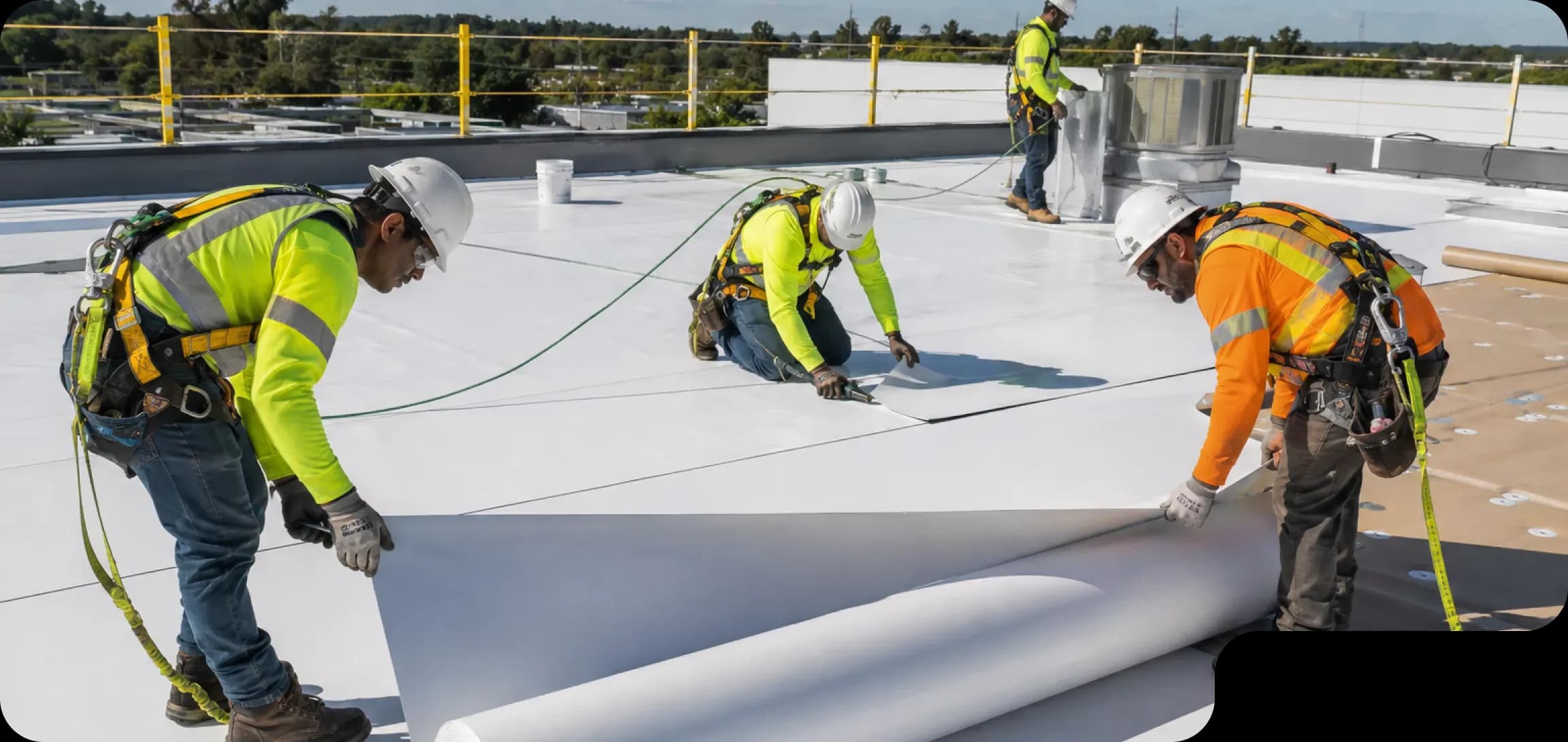
Three steps, performed on your roof:
- 1
Base coat
A water-based acrylic applied directly over the prepared existing roof.
- 2
Fabric
A 40-inch reinforcing fabric embedded into the wet base coat.
- 3
Top coat
A second liquid application over the fabric, wet-on-wet.
The result is a single monolithic membrane, fully adhered, with no factory seams to reassemble.
- Drains — material carried into the drain bowl. Nothing clamped, nothing to loosen.
- Seams — overlapped and coated. The seam is eliminated, not welded.
- Walls — the material adheres. No termination bar, no new holes in a solid wall.
- Penetrations & corners — sealed monolithically with fabric reinforcement.
- Expansion joints — the system expands and contracts with the structure.
- Perimeters — self-adhering, continuous, no mechanical edge to peel.
At each of the seven failure points, the detail is handled differently:
It's tested where it counts
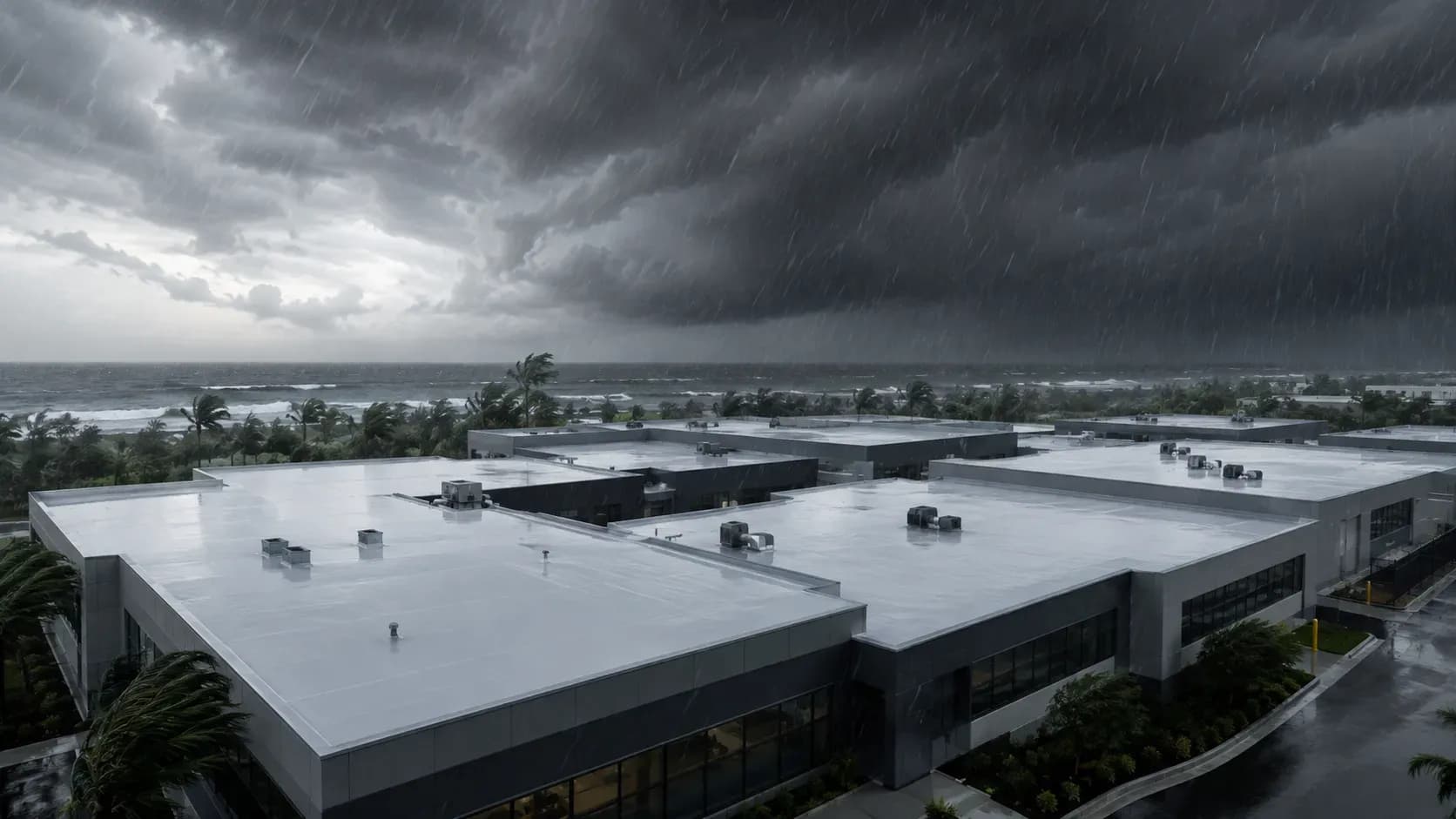
Fluid-applied fabric-reinforced systems carrying FM 4470 approval have been documented through extreme weather, including a super typhoon with sustained winds of 145 mph and gusts above 236 mph, with all 240-plus roofs remaining intact.

Renewable warranties
This is the part that changes the math.
Acrylic fluid-applied systems weather from the top down. A measurable amount of surface mil thickness is lost over the life of the coating — and it can be replaced by adding more coating. Because of the chemistry, a regenerated roof is as strong as the original installation, and carries forward for another full term depending on the added thickness.
Practically, that means:
Clean the roof

Recoat
The warranty renews at a fraction of the original cost.
And because a restored roof is one roof, you never accumulate the second roof that triggers a code-mandated tear-off.
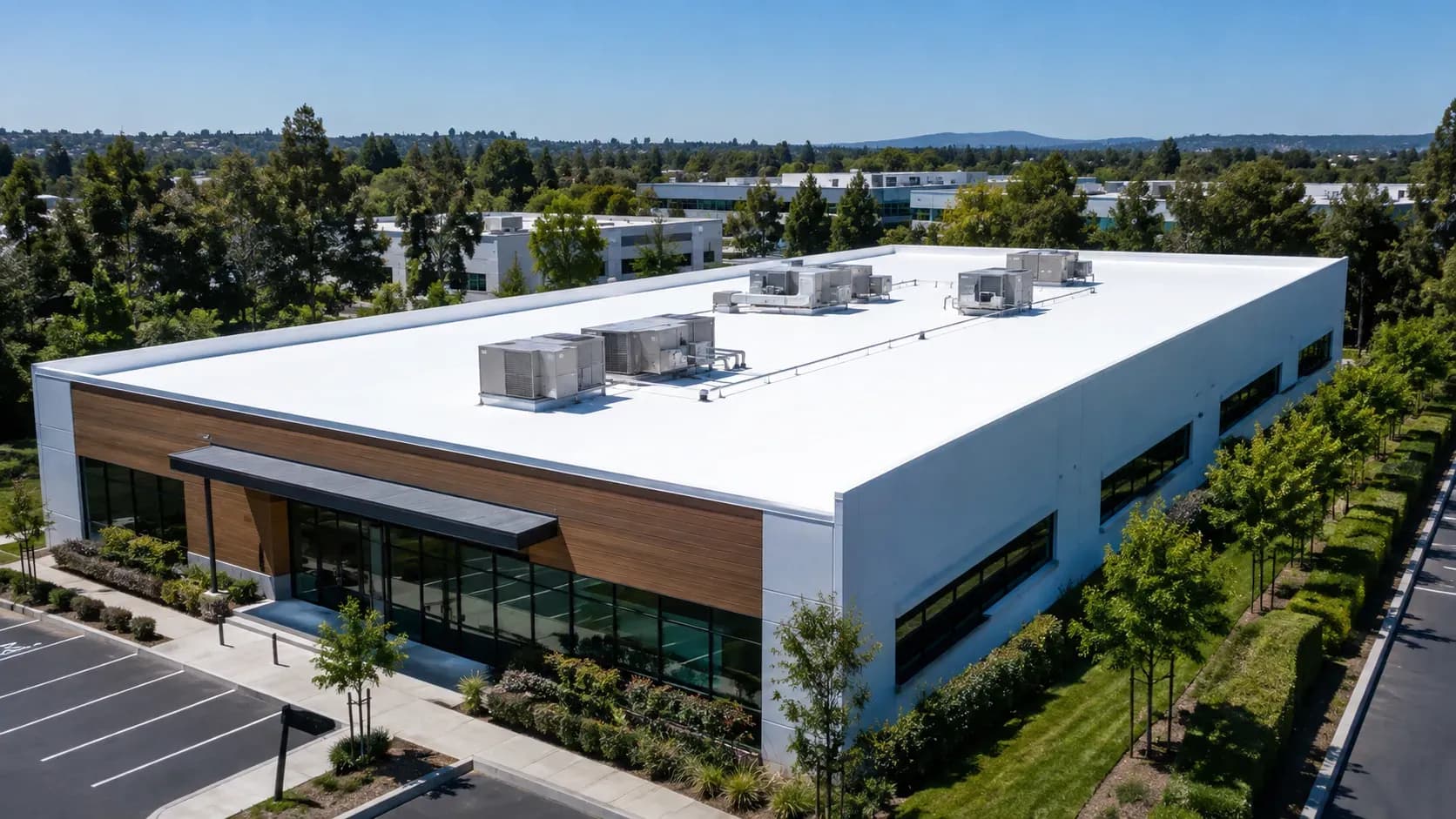
Systems using a CRRC-approved top coating also reduce both surface and internal building temperature. That prolongs the life of the coating, the roof beneath it, and the insulation — and it feeds cooler air to roof-mounted HVAC units, which improves efficiency and reduces equipment wear. It may also be eligible for LEED points.
The financial case
Three phases of return
- 1
Phase One — Installation
Restoration avoids the tear-off entirely. Historically, this has run roughly $4 per square foot against $10 per square foot for tear-off and replacement.
- 2
Phase Two — Energy
A reflective, CRRC-rated surface reduces cooling load and rooftop equipment strain. On a fully coated Houston-area campus, first-year electrical cost dropped roughly 20%.
- 3
Phase Three — Renewal.
At the end of the warranty term, recoating costs a fraction of replacement — and prevents the tear-off cycle from ever starting.
Current pricing for restoration typically falls between $5.00 and $6.50 per square foot, driven by two factors: the condition and type of the existing substrate, and how much equipment sits on the roof. Distance from Houston is a secondary factor.
Case study
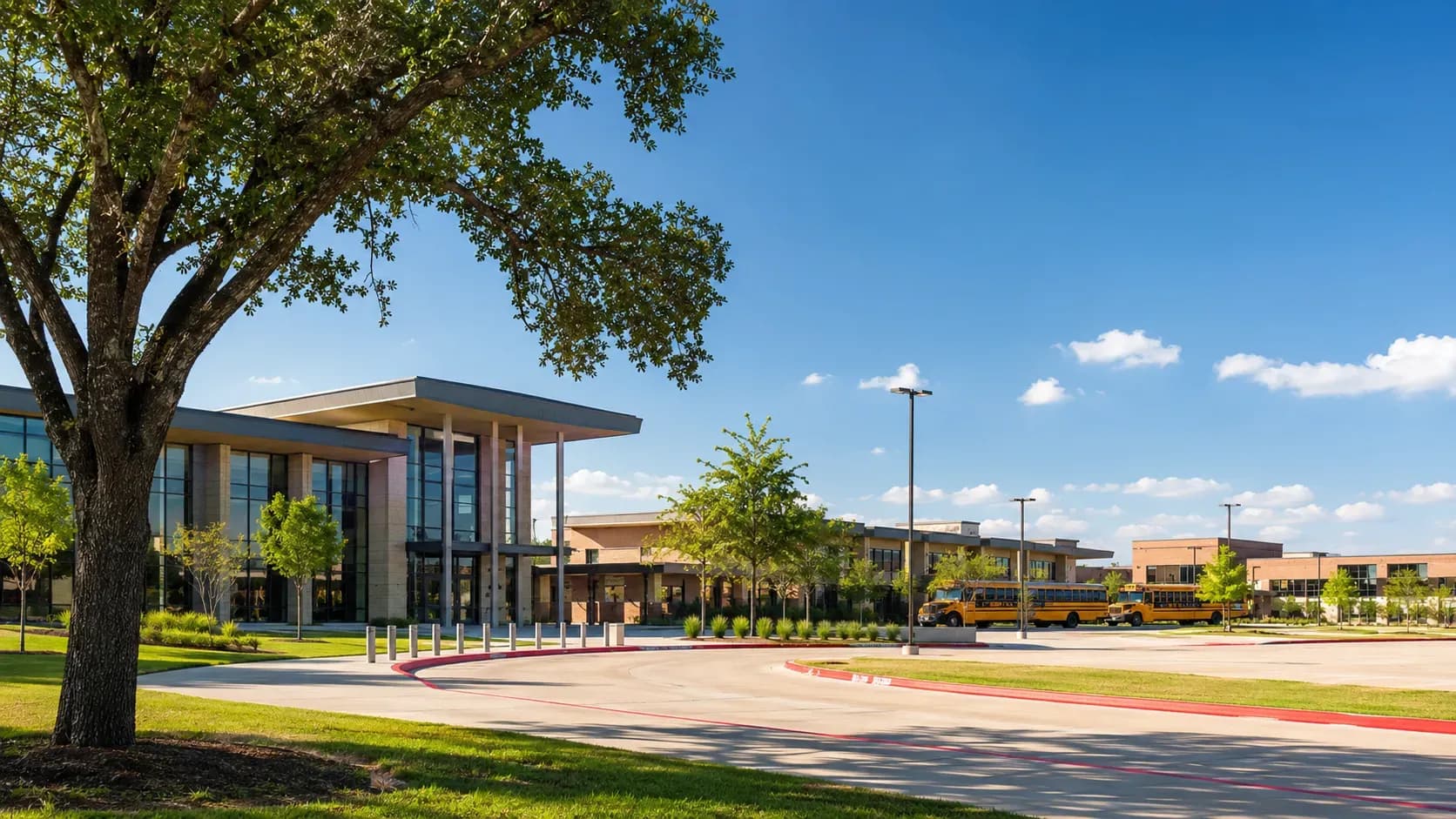
A Houston-area school district, 2008 — 400,000 square feet
The situation. An aging roof system across a large campus. The district was preparing to tear off and replace at approximately $10 per square foot.
The decision. Restoration was installed at approximately $4 per square foot, over the existing roof, without disrupting the school calendar.
The outcomes.
- Roughly 20% reduction in first-year electrical cost on the fully coated building
- Measured reductions in power demand, energy consumption, and cooling tower water use
- 397 dumpsters of roofing debris avoided — two were used
- The roof remains renewable rather than replaceable nearly twenty years later
The long view. That same tear-off scope prices at $20–$25 per square foot today. Recoating prices at $4.
Frequently asked questions
Does Harvest install roofing systems?

Yes. Our crew has worked together for fifteen years. But we evaluate first, and we don't recommend work that isn't warranted. Sometimes the honest answer is that your roof has years left and needs maintenance, not investment.
Is my roof a candidate for restoration?
Most are; not all. It depends on the existing substrate, moisture in the system, and structural condition. That's what an evaluation determines — and if restoration isn't right for your building, we'll say so.
Will this disrupt my operations?
Very little. There's no tear-off, no demolition noise, no toxic fumes, and no open roof exposed to weather. Work proceeds year-round, which means you're not confined to a summer window or racing a storm with your building open.
How long does it last?
The system is designed to last the life of the building through periodic renewal, rather than being replaced on a fixed cycle.
What if I already have two roofs?
Then building code likely requires a tear-off before a new system goes on — which is exactly the situation restoration is meant to prevent for owners who act earlier.
How much does it cost?
Typically $5.00–$6.50 per square foot, depending on substrate condition and rooftop congestion.
Before you approve a tear-off, get a second opinion.
A conversation costs nothing. A replacement you didn't need costs a great deal.