
 Engineered Longevity
You Can't See Most Indoor Air Problems.
Germs, bacteria, viruses, mold, and other contaminants can move through occupied spaces without anyone seeing them. That makes the problem easy to ignore until people get sick, odors develop, or testing reveals what was there all along. What You Can't See Still Matters.


 Engineered Longevity
Why This Matters Now
The indoor environment can affect health, attendance, learning, employee performance, operating costs, and the financial performance of the building itself.
Building owners may not recognize a problem until recurring illness, odors, mold concerns, or testing make it visible.
The goal is not simply to respond after a problem appears. The goal is to create a healthier, better-performing building.

What's Actually Happening Inside Your Building?
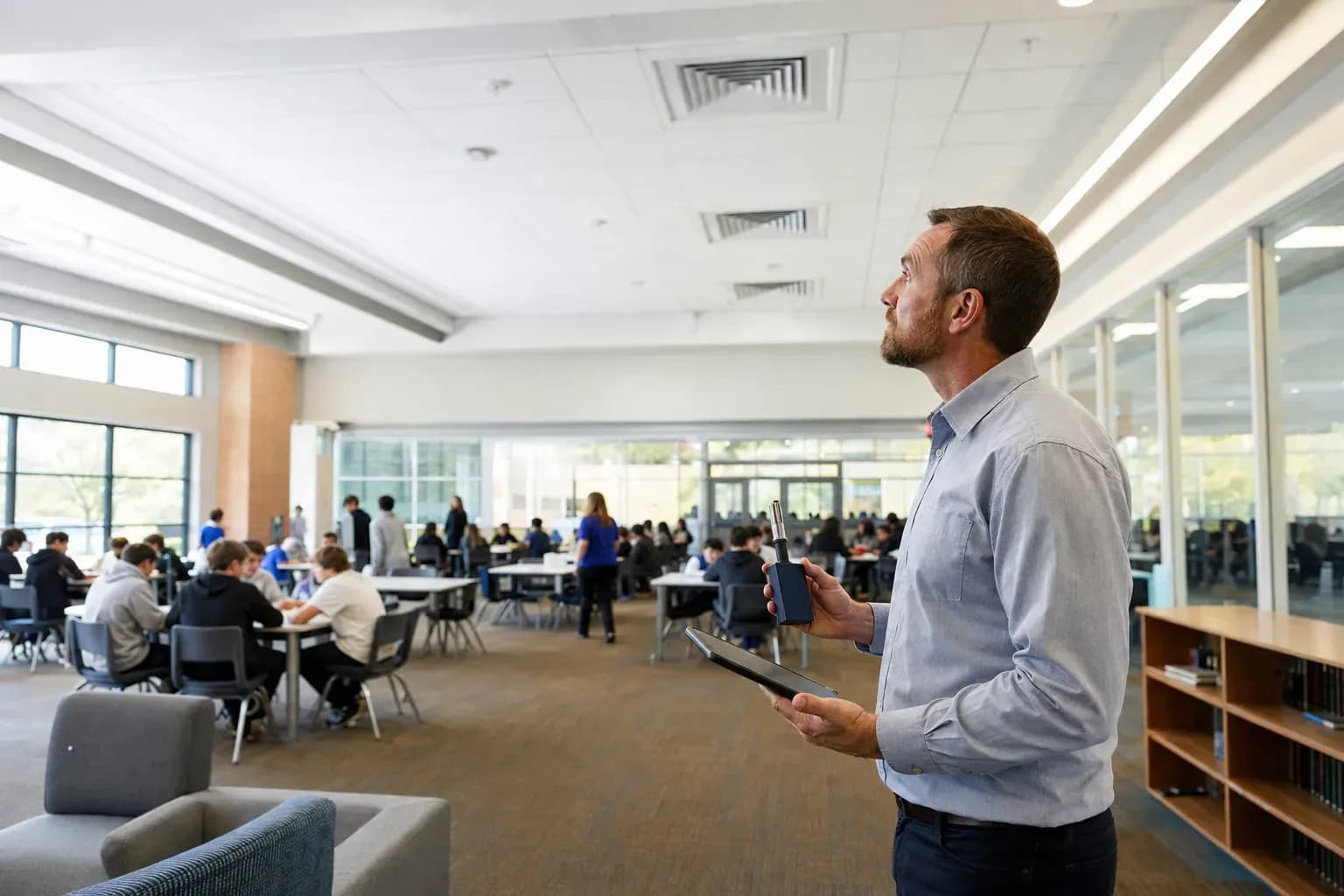
Harvest begins by asking what is actually happening inside the occupied environment.
Odors
Persistent odors can indicate that normal cleaning is not fully addressing what is happening between cleaning events.
Recurring Illness
Patterns of illness or absence may signal that the occupied environment deserves closer evaluation.
Mold Concerns
Moisture intrusion and indoor environmental conditions can create concerns that require more than surface cleaning.
Heavy Occupancy
Schools, locker rooms, healthcare facilities, offices, and shared spaces are continually changed by the people using them.
Shared Surfaces
Frequently touched surfaces can be reintroduced to contamination immediately after they are cleaned.
Building Conditions
Ventilation, moisture, occupancy, maintenance, and building use all affect the indoor environment.
Engineered Longevity
Cleaning Is Important. But Cleaning Is Periodic.
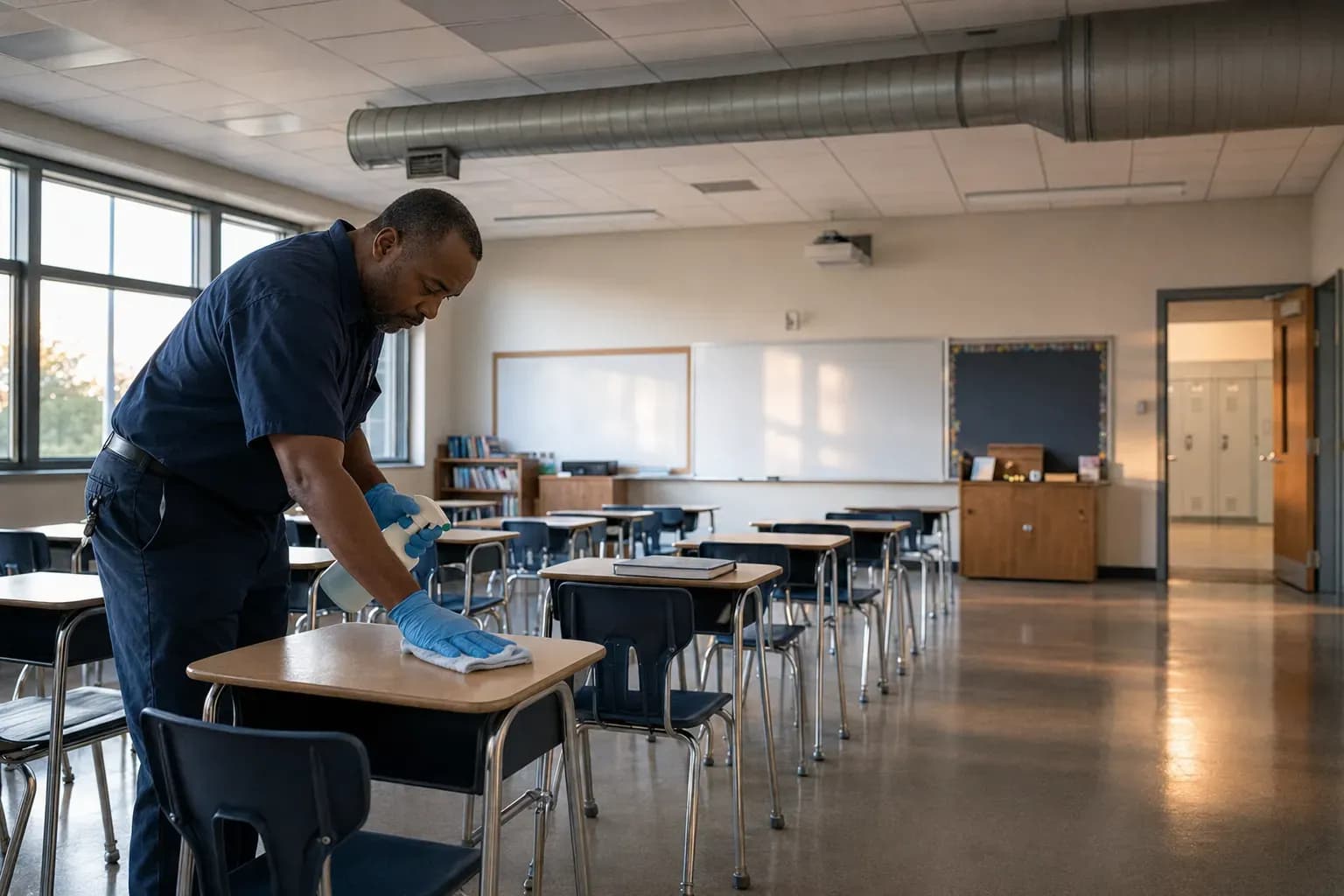
Cleaning removes contamination at a point in time. People return after a space is cleaned and immediately begin changing the environment again.
What Happens Between Cleanings?
Continuous treatment is designed to work between normal cleaning events while people are actually occupying the building. The goal is not more cleaning. The goal is a better environment between cleanings.
Engineered Longevity
Health Has an ROI.
Indoor air is more than a health issue. A healthier occupied environment can support attendance, learning, employee performance, operating efficiency, and organizational value.
Healthier Students Spend More Time in the Classroom.
Harvest's conservative school model uses a published 24.6% reduction in infection-related absence as its planning benchmark. For an illustrative 900-student school, that represents approximately:
The actual value is calculated using each district's own attendance and funding data.
These are planning scenarios, not guarantees. Every project requires its own attendance, engineering, utility, maintenance, and construction data.
24.6%
Potential reduction in infection-related absence used as a planning benchmark.
664
Recovered student days per year.
$22,933
Estimated annual attendance value.
The ROI Goes Beyond Fewer Sick Days.
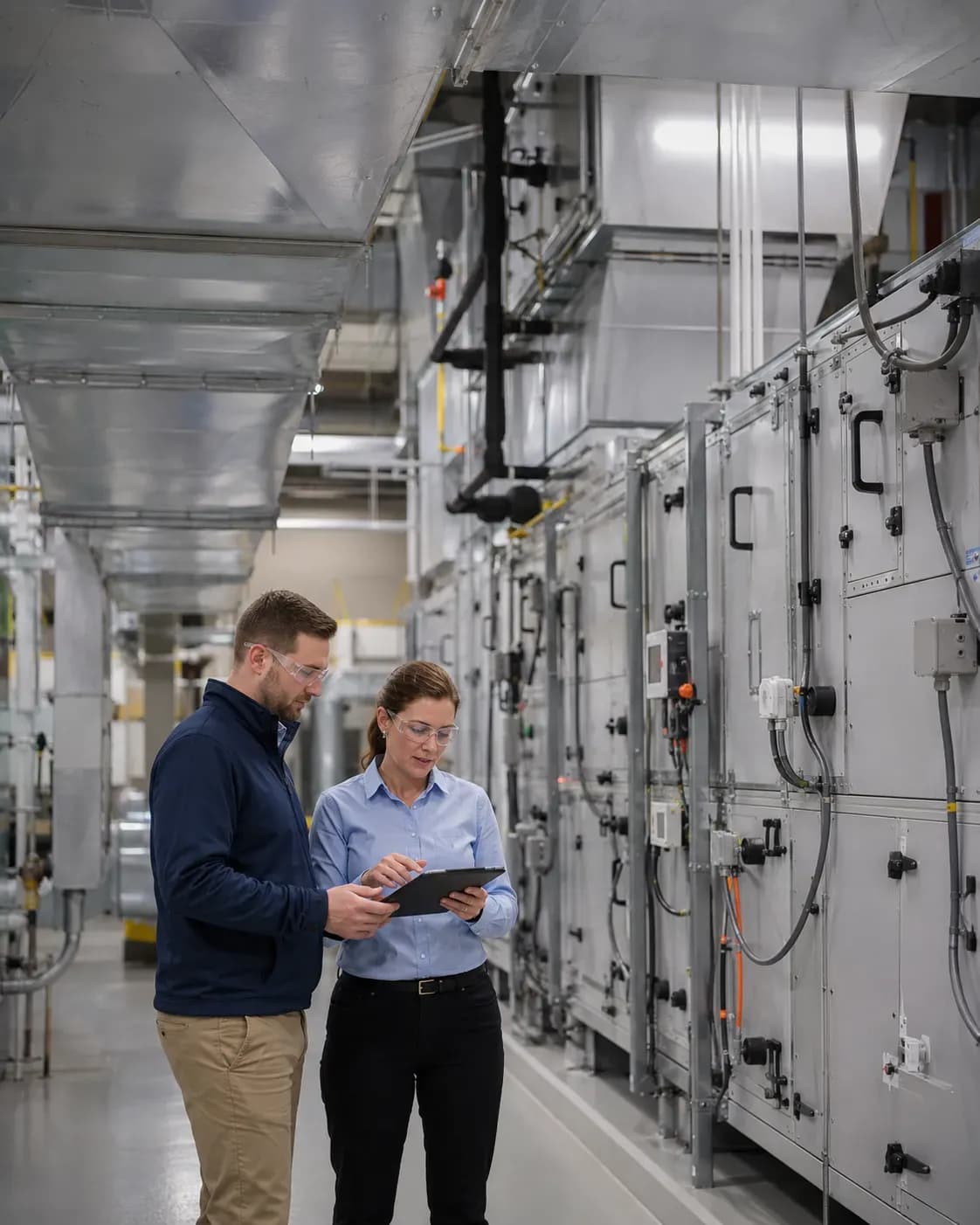
Continuous air treatment may also become part of the building's mechanical and energy strategy. When a qualified engineer determines that the technology can be incorporated into a compliant design, the building may be able to reduce some of the cost associated with conditioning outdoor air. In Harvest's illustrative 100,000-square-foot school model:
$150K–$375K Potential engineer-verified mechanical savings, depending on the project.
$10K–$32K Illustrative annual energy savings.
Approximately 5.7 Years — conservative modeled payback when mechanical savings, energy, attendance value, and maintenance are considered together.
These figures are planning examples, not guarantees. Every project requires project-specific engineering and validation.
Engineered Longevity
Where we help
Harvest works in the occupied buildings where indoor conditions have the most direct effect on the people inside them.

Schools & Daycare
Healthier occupied environments that support students, educators, staff, and attendance.

Healthcare
Indoor environments where the health and safety of patients, visitors, and staff matter every day.

Churches
Better environments for gathering, worship, education, and community activities.

Athletic Facilities
Continuous treatment for locker rooms, training spaces, equipment areas, and other heavily occupied environments.

Industrial
Indoor environmental strategies for facilities with complex occupancy, ventilation, and operational conditions.

Commercial
Healthier, better-performing workplaces that support occupants, operations, and long-term building value.
We Don't Start With a Product. We Start With the Problem.
Harvest begins by understanding the building and what is actually happening inside it.
Are there odors, recurring illness, mold concerns, heavy occupancy, shared surfaces, or other signs that the environment needs attention?
The goal is not to sell equipment. The goal is to create a healthier, better-performing building.
What Is CIMR®?
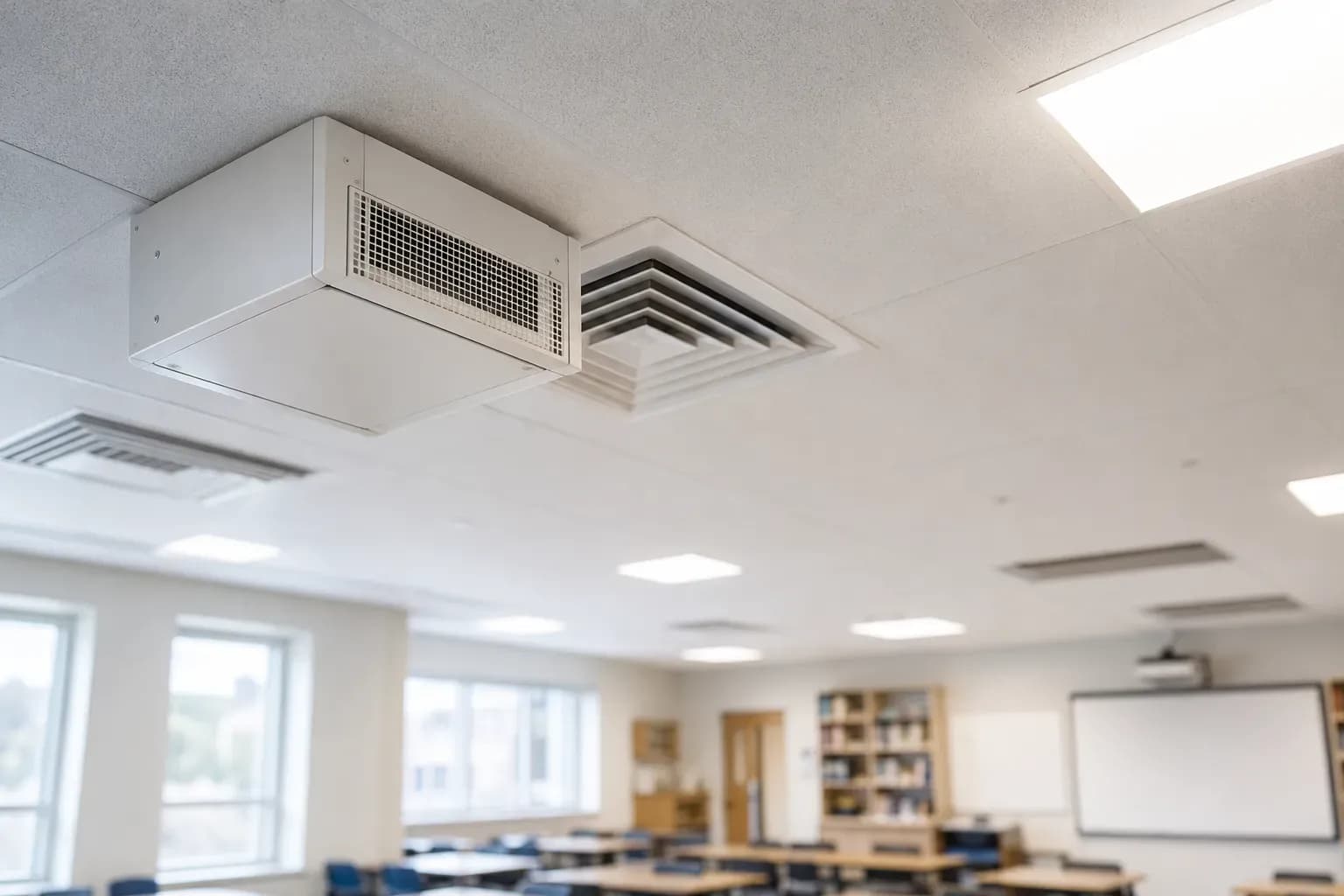
CIMR® is designed to continuously treat indoor air and exposed surfaces in occupied spaces.
Harvest uses it as part of a broader problem-solving strategy when the building and application make sense. Technology Is the Tool. A Healthier, Better-Performing Building Is the Goal.

Protect the People Inside.
A roof protects the building and everything beneath it. Indoor environmental technology helps protect the people occupying that building. And the value may extend to attendance, performance, energy, HVAC investment, and long-term operating costs.
Roofs Protect the Contents. Sanitized Air Protects the People. We Do Both.